
Mastering Data Federation: A Comprehensive Guide
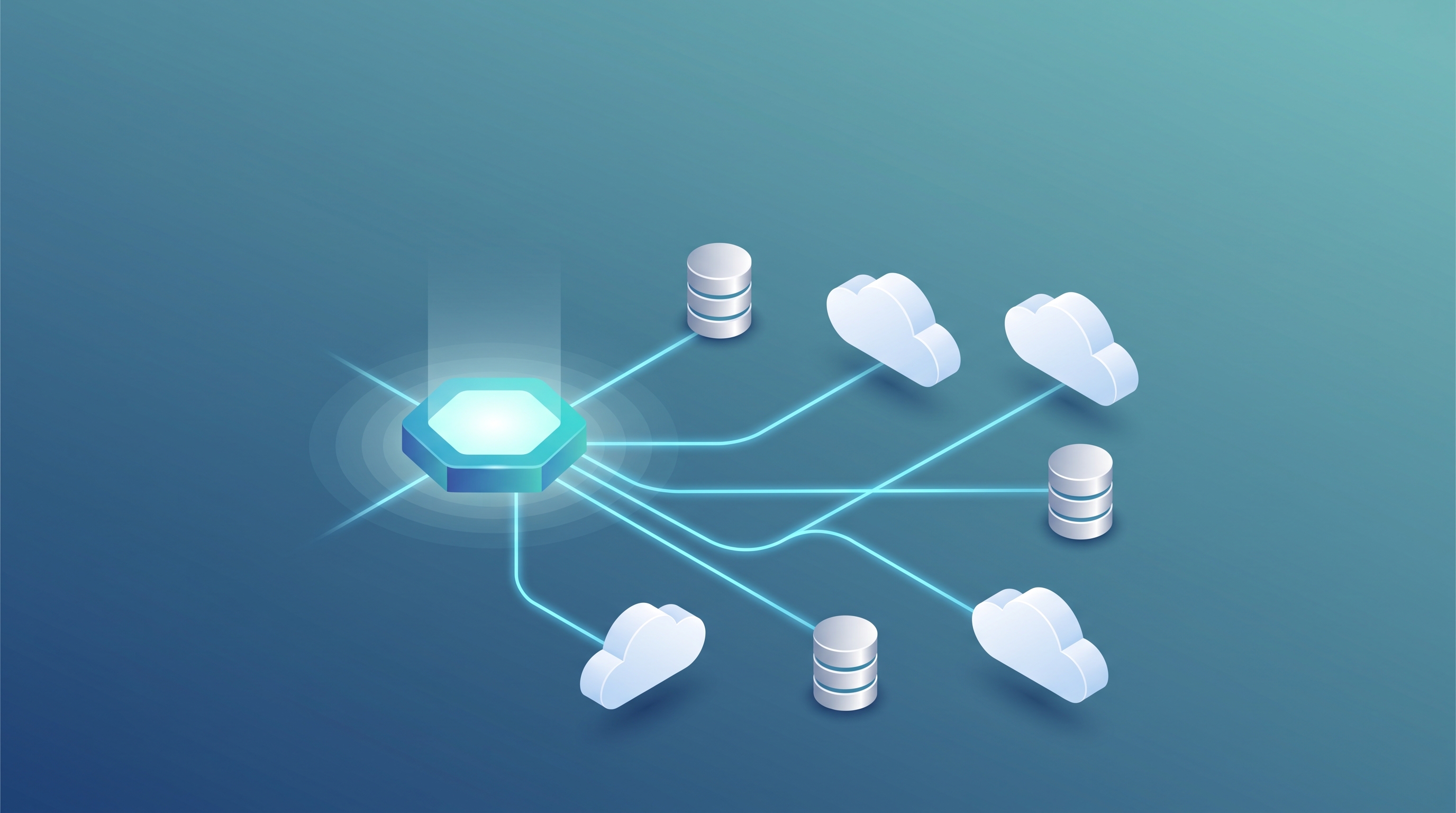
Data federation lets you query data across databases, warehouses, and lakes in place, without copying everything into a new store first. This guide explains how federation actually works, what a governed semantic layer adds on top of it, and how a platform like SemanticFed puts the pieces together.
What Is Data Federation?
Data federation connects to many different data sources and lets you query them as if they were one. Instead of extracting rows into a central warehouse first, a federation engine sends part of the query to each source, gathers the results, and joins them at query time. As Fivetran's overview of the approach puts it, federation builds a logical layer over your existing systems rather than a new physical copy of them.
Most data teams have data scattered everywhere: an operational Postgres database for orders, a Snowflake or BigQuery warehouse for historical facts, S3 buckets full of Parquet files, and a handful of SaaS APIs. Answering one real business question often means touching three or four of these systems. Data federation gives you one interface for all of them, instead of one integration project per question.
How Federation Differs from a Warehouse or an ETL Pipeline
Traditional analytics stacks solve the "data is everywhere" problem by moving data. An ETL (extract, transform, load) job pulls data out of each source, reshapes it, and loads it into a warehouse. That works well for stable, well-understood reporting, but every pipeline is a piece of infrastructure you now own: something to build, schedule, monitor, and fix when a source schema changes underneath it.
Data federation takes the opposite default. It leaves data where it is and queries it in place. That has three practical effects:
- No second copy of the data to keep in sync with the first
- Results reflect the live source, not last night's batch load
- Less infrastructure to operate, because there's no pipeline sitting between the source and the query
This doesn't make ETL pointless. Some workloads genuinely need pre-computed, heavily indexed data for speed at scale. Federation isn't a warehouse replacement — it's a way to avoid building a pipeline for every question that doesn't actually need one.
Where a Semantic Layer Fits In
Querying sources directly solves half the problem. The other half is making sure two people asking the "same" question get the same answer. That's what a semantic layer is for.
A semantic layer is a typed model that sits above your federated sources. In SemanticFed, that means defining entities, dimensions, and metrics — things like "active revenue" or "monthly active accounts" — once, as documented, versioned objects, instead of re-writing the same SQL fragment in five different dashboards. Every consumer of the model, whether it's a BI tool, a notebook, an API call, or an AI agent, resolves the same definition. The numbers agree because they're computed the same way, not because someone reconciled them by hand afterward.
A searchable data catalog sits next to the model, so analysts can find a governed dataset and read its description, type, and lineage instead of reverse-engineering a raw schema.
How SemanticFed's Federated Query Engine Works
SemanticFed is a data federation platform being built to bring the query engine, the semantic layer, and governance together into one control plane. Four pieces do the work on the query side:
Federated SQL. Write one ANSI-style SQL statement that joins tables across databases, warehouses, lakes, and APIs. The engine resolves it across sources and returns a single result set.
A cost-aware planner. Filters, projections, and aggregations get pushed down to each source instead of pulling whole tables across the network first. The planner estimates cost across the available paths and picks the one that moves the fewest bytes — this is what keeps a federated query fast instead of turning it into a full-table transfer.
Virtual views. Model the shape you need as a view over federated sources. Transformations and joins run at query time, so there's no materialized copy sitting behind the scenes that someone has to refresh.
Opt-in caching and materialization. Not every query needs to be live to the millisecond. For hot paths — an executive dashboard, a high-traffic embedded chart — you can turn on result caching or materialization with a freshness policy you control. Everything else stays live by default.
Governance and Security at the Query Edge
Federating access to more sources only works if governance travels with it. SemanticFed applies policy at the query edge — the point where a query actually runs — instead of leaving every connected source to enforce its own rules on its own:
- Row and column policy. Define row filters (a salesperson sees only their region) and column masking (personal data stays hidden unless explicitly granted) once, and they apply to every federated query, regardless of which source the rows came from.
- Audit trail. Every query is attributable to an actor and logged along with the policy that applied, so an access review reads as one consistent record instead of a stack of per-source logs.
- End-to-end lineage. Every dataset traces back through its virtual views to the physical sources, so you can answer "where did this number come from" without archaeology.
- Inherited identity and RBAC. Authentication and role-based access control are inherited from the underlying Burdenoff platform and enforced at the edge, so SemanticFed isn't reinventing authentication for every source it connects to.
The Security page covers this model in more depth, including how encryption, secrets management, and residency-friendly federation fit together.
A Federation Query, Start to Finish
Here's an illustrative example of what a federated question is meant to look like once SemanticFed launches. It's a scenario describing the target experience, not a record of a real deployment, since the platform is still pre-launch.
An analytics engineer needs current order status from an operational Postgres database, joined to historical revenue facts in a warehouse, joined again to clickstream data sitting in Parquet files in a data lake. Today, that usually means three pipelines and three copies, plus a staleness problem the moment any one of them falls behind.
With SemanticFed, each source is registered once, the join is modeled in the semantic layer, and the analyst writes a single SQL statement. The planner pushes predicates and aggregations down to each source, so only the rows that matter move across the network, and the results get stitched together into one answer. Because nothing was copied, the result reflects the live operational system — and the same model can power a BI dashboard, a notebook, and an API call without being redefined three separate times.
Benefits of a Data Federation Approach
Put together, federation and a governed semantic layer change a few things about how a data team operates:
- Fewer pipelines to babysit. Every ETL job you don't need to build is monitoring, alerting, and reconciliation you don't need to do either.
- Faster access to current data. Query-in-place means results reflect the live source, not last night's batch load.
- One governance model, not ten. Policy defined once in the semantic layer applies everywhere, instead of drifting across a dozen source-specific permission systems.
- A steadier base for AI. An agent that queries a typed, documented semantic layer reasons over real metric definitions with access policy applied, instead of guessing at raw table names.
What to Look for When Evaluating a Federation Platform
If you're comparing options, a few questions tend to separate a genuinely useful federation platform from one that just relabels an old idea:
- Does it push work down to the source, or pull data across the network first? This is the single biggest factor in whether federated queries stay fast and affordable.
- Is governance built into the query layer, or bolted on per source? Policy that lives in one place is auditable. Policy scattered across ten systems usually isn't.
- Can non-technical tools consume the same model? A semantic layer only earns its keep if BI tools, notebooks, and APIs all resolve the same definitions.
- Is there an inspectable query plan? You should be able to see exactly what ran where before you trust a result.
- How is multi-tenancy handled? If more than one team will use it, workspace isolation matters as much as the query engine itself.
Where Data Federation Is Headed
Two trends are pushing federation from a niche technique toward a default architecture. AI agents need governed context, not raw database access, and a typed semantic layer is a natural place to ground an agent's answers in documented, access-controlled definitions instead of a guessed schema. At the same time, data residency rules keep tightening, and federation's query-in-place model sidesteps a whole category of compliance risk that comes from copying regulated data across borders in the first place.
Neither trend makes ETL disappear entirely. They do mean fewer new pipelines get built for questions that could have been answered where the data already lives.
FAQ
What is data federation? Data federation is a way to query multiple, separate data sources — databases, warehouses, lakes, APIs — through one interface, without first copying them into a single repository. The engine resolves each query across the underlying sources at runtime.
How does SemanticFed work? SemanticFed connects to your sources as federated connectors, lets you model them once in a governed semantic layer, and runs queries across them through a cost-aware planner that pushes work down to each source. Policy, audit, and lineage are enforced at the query edge.
Is data federation slower than a data warehouse? It depends on the engine. One that pulls whole tables across the network first will be slow. A cost-aware planner that pushes filters and aggregations down to the source, and only moves the small result, avoids that problem — and you can add caching for the paths that need millisecond speed.
Do I still need a data warehouse if I use federation? Usually, yes, for workloads that need heavy pre-computation or very high query volume. Federation isn't a warehouse replacement; it's a way to avoid building a pipeline for every question that doesn't need one.
How does data federation help with governance? Because policy is enforced at the query edge instead of per source, row filters, column masking, and access rules apply consistently no matter which system the data lives in — so an access review reads as one thing instead of ten.
Ready to Query Everything in Place?
SemanticFed is launching in 2026. Join the waitlist for early access, or explore the platform's features to see how the query engine, semantic layer, and governance model fit together.